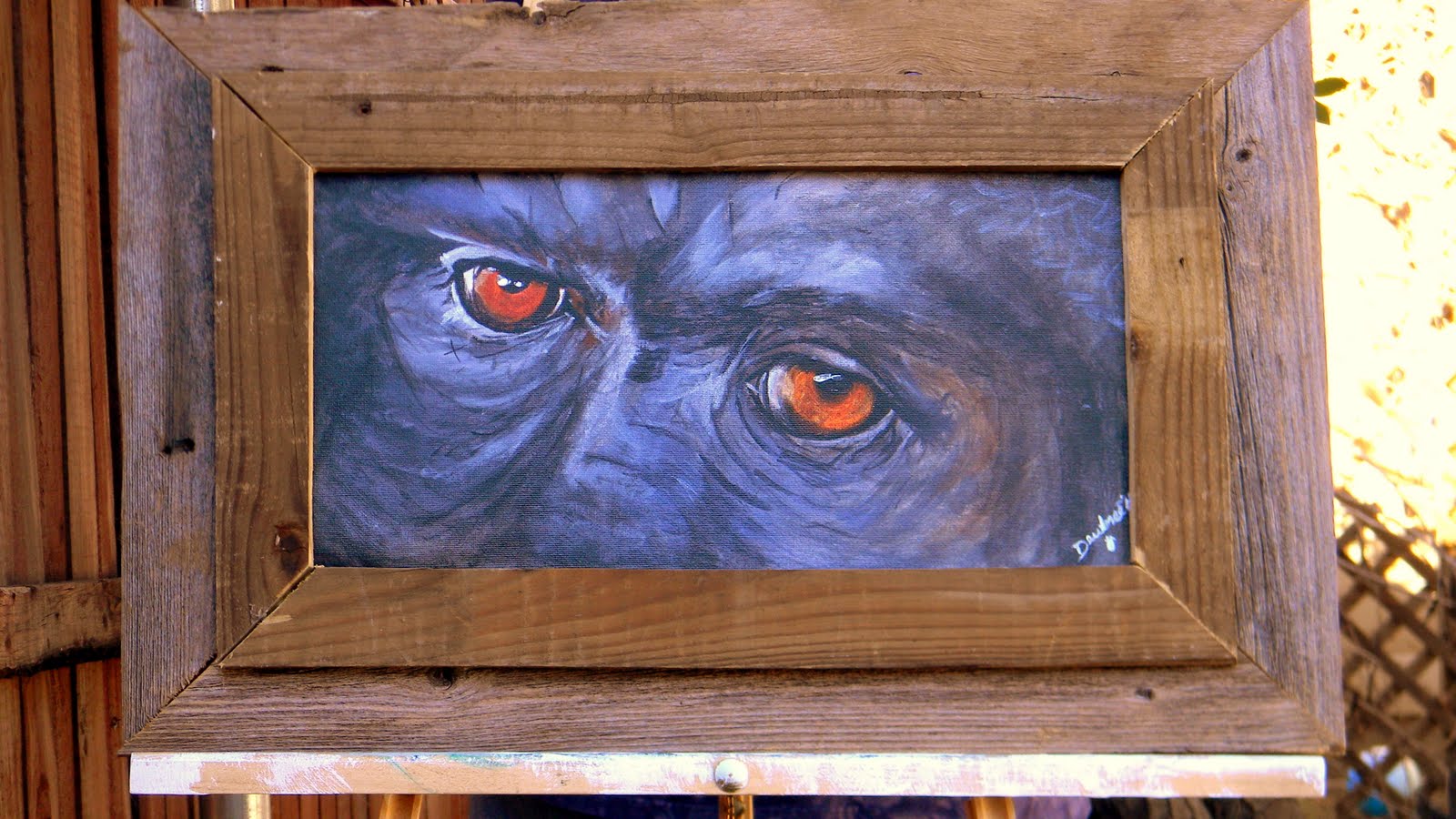
Lady Moon Gazing Upon Mother Earth is an acrylic painting on a stretched canvas measuring 12" x 16" for $160.
Glass Pyramid is an acrylic painting on a gallery wrapped canvas measuring "16 X 20" for $280
Fruit Of Peace was raffled off at CommuniTree on September 24th 2011 to raise funds for Earth Rhythms.
This new hand painted sign was recently completed as a commission for our friend Sherry Blue who will be using it to promote her business. Thank you Sherry! :)
This hand painted sign was recently completed as well and will serve as the logo for our friend Alana to use in promoting her business.
Stay tuned for more!
Primal Aspects is a home based, family owned business in Arlington, Texas founded by Emily Dewbre-Young in January 2009 featuring original artistic creations of nature, fantasy, legend, mythology and folklore. Some of our creations might be closer than you think. Call or text (817) 705-0631 or email artist@primalaspects.com
Sunday, September 25, 2011
Friday, September 23, 2011
Ready For Tomorrow?
CommuniTREE Celebration
Get Ready for some Action!
September 24th- Saturday - 10:00-2:00
The Fall Festival-Trees for Life will start at 10:00am at the White Rock Lake Bath House Cultural Center on the lawn, in the building, under the trees. A GREAT DAY FOR THE FAMILY... photo ops galore! Click Link for more excitement!!!
http://earthrhythms.org/ communitree/communitree.html
HOW COMMUNITREE CAME TO BE
Amy Martin, executive director of Earth Rhythms, relates: "This event is an outgrowth over the group's long-time relationship with several 100+ year old elm trees behind the Bath House Cultural Center, where we have held many festivals. When the trees were cut down due to ill health, Earth Rhythms commemorated one by having artist Julia Schloss paint a butterfly on the stump. It was eventually cut off and the slab turned into an art table for the facility. Another tree was honored with a "Goodbye to a Tree" service before it was cut down. Both were so well received that CommuniTREE was a natural outgrowth."
TREES: SOMETHING TO CELEBRATE
This year, 2011, has been designed by the United Nations as the International Year of the Forests (http://www.celebrateforests. com/) A Celebrate Forests campaign has been created for this by National Association of State Foresters (NASF), the USDA Forest Service, and the American Forest Foundation (AFF).
Throughout history trees have been revered and seen as sacred symbols of power, wisdom, healing, fertility and even life itself. The World Tree or Tree of Life is found in virtually every culture and religion, symbolizing the union of heaven and earth and the interconnection of life. Trees teach us to grow our roots in fertile soil and reach for our dreams while reminding us to live in balance and harmony.
Trees are anchors of most ecosystems, stabilizing soil and preventing erosion while filtering pollutants from rain and ground water. Worldwatch Institute estimates at least 321 million acres of trees need to be planted just to restore and maintain the productivity of soil and water resources. Trees produce half of the atmosphere's oxygen, while the average tree absorbs of 13 pounds CO2 each year. Shade from trees can reduce utility bills for air conditioning by 15 to 50 percent.
Dallas area neighborhoods with mature trees can be up to 11 degrees cooler than new neighborhoods without trees, and a one-degree rise in temperature equals a 2% increase in peak electricity consumption; and cities are 5 to 9 degrees warmer than rural areas, with 3% to 8% of summer electric use going to compensate for this urban "heat island" effect. Statistics from Dallas Urban Forestry
HAPPY AUTUMN AND c u THERE!
Tzivia, Amy, Rodney
& the Board of Earth Rhythmshttp://earthrhythms.org/communitree/communitree.html
Wednesday, September 21, 2011
Primal Aspects Calendar
Stay on top of where we'll be and places you can see some new artistic creations by Emily Dewbre-Young and/or some of our friends by keeping tabs on our new calendar:
Primal Aspects Calendar
Sunday, September 4, 2011
Honeybees and Pests Which Bug Bees
Found On Moonlady News! http://www.moonlady.com/ indexnews.html
"Honeybees and Pests Which Bug Bees"
September 7
7:00 p.m.-9:00 p.m.
Talk by Bill Baxter for The Trinity Valley Bee Keepers Association.
The meeting will feature a talk on honeybees by
Bill Baxter, Assistant Foulbrood Inspector, Apiary Inspection Service,
Department of Entomology, Texas A&M University. All welcome ~
membership is not required. Complimentary event. For more:www.tvbees.org
.
The Point, Center for Arts and Education at C. C. Young
4847 West Lawther, Dallas, Texas 75214
RSVP: 214-841-2834 or daver@ccyoung.org
"Honeybees and Pests Which Bug Bees"
September 7
7:00 p.m.-9:00 p.m.
Talk by Bill Baxter for The Trinity Valley Bee Keepers Association.
The meeting will feature a talk on honeybees by
Bill Baxter, Assistant Foulbrood Inspector, Apiary Inspection Service,
Department of Entomology, Texas A&M University. All welcome ~
membership is not required. Complimentary event. For more:www.tvbees.org
.
The Point, Center for Arts and Education at C. C. Young
4847 West Lawther, Dallas, Texas 75214
RSVP: 214-841-2834 or daver@ccyoung.org
Friday, September 2, 2011
New website with easy-to-find water-wise drought tips
We heard about this on Moonlady News. Thanks! http://www.moonlady.com/indexnews.html
website called Water Education in Texas (http://agrilife.org/drought/), solely
for the purpose of providing homeowners and producers with easy-to-find
water-wise drought tips.
“We found that the longer this historical drought hangs on, the more
information is generated to help Texans cope with it,” said Dr. Pete Gibbs,
AgriLife Extension associate director at College Station. “The trouble is,
we’re now drowning in a virtual sea of drought-related information. To stem
the flow, AgriLife Communications has siphoned off only the most pertinent
information that’s been submitted by our experts. This information has been
updated, then further edited down to provide the public with just what they need
to know.”
Gibbs said the site is easy to navigate because it has only three main
categories, which are easily accesses by a single click of the mouse. The
site’s categories are “Your Home,” which deals with everything from leaky
faucets to washing machines; “Lawn and Garden,” which addresses topics
including drip irrigation and watering trees, and “Agriculture and
Wildlife,” which offers tips on livestock, crops, fish and wildlife.
categories, which are easily accesses by a single click of the mouse. The
site’s categories are “Your Home,” which deals with everything from leaky
faucets to washing machines; “Lawn and Garden,” which addresses topics
including drip irrigation and watering trees, and “Agriculture and
Wildlife,” which offers tips on livestock, crops, fish and wildlife.
The information is offered in short, bulleted single sentences with a key word
or phrase embedded within the text for those seeking more in-depth information
on that particular topic, Gibbs said.
“Our main goal is to provide the best information possible that people can
actually use,” Gibbs said. “You can have the best information in the world,
but if your clientele can’t find it or don’t know it exists, it’s pretty
much worthless.”
-30-
Find more stories, photos, videos and audio at agrilife.org/today and view this
story at:
http://tinyurl.com/44bnvmk
We grant permission for the use of this news as a free service to the
news media. Articles may be used either in their entirety or in part,
provided that attribution remains. You may use the stories and art, or
you may put the stories, art and/or news videos on your websites.
High resolution photos, audio and video also are provided with many of
our articles for your use at agrilife.org/today
Wednesday, August 31, 2011
Tired Of The Urban Heat Island Effect?
FYI from AMY: Enter the raffle for a 15 and 45 gallon tree, or attend
the opening and closing ceremonies for sapling giveaways. Learn how
you can get free trees to plant in parks and medians in your area to
reduce the heat. More info on CommuniTREE: http://www.EarthRhythms.org/
Addressing Dallas' Urban Heat Island Effect
What is the Urban Heat Island?
Like many metropolitan areas, Dallas’ is affected by an Urban Heat
Island (UHI), which is caused by the large concrete areas that are
warmer than the natural rural areas. Sometimes there is a 10-12 degree
temperature difference between the inner urban and rural areas. By its
nature, concrete, asphalt and buildings tend to absorb heat, and a
lack of trees as well as other plant life prevents natural cooling
from occurring. Additionally, the absence of vegetation that naturally
removes pollutants from the air can lead to poor air quality.
The committee is working with various city departments,
including Dallas’ Environment Quality Department on reducing the UHI
effect. In 1995, Texas Christian University professor, Dr. Ken Morgan,
conducted the city’s first urban heat island study, which showed a
large section of central and downtown Dallas having temperatures
several degrees warmer than the surrounding suburbs and countryside.
In 2009, the Environmental Protection Agency commissioned its own
updated study on Dallas’ urban heat island areas providing further
research on this issue. This heat effect can impact not only Dallas’
environment, but also its quality of life by having hotter than normal
temperatures, higher energy bills, and poorer air quality.
Trees Can Cool Dallas
Reducing the urban heat island affect is challenging task; however,
one effective tool shown to lower urban temperatures and improve air
quality is the planting of trees. In fact, the 1995 study also
revealed that Oak Cliff, and its tree covered neighborhoods, had one
of the coolest temperatures compared to the rest of the city. Trees
can have a positive effect on urban heat island areas.
How Can Trees Reduce Dallas Temperatures?
Trees have many qualities well suited to reduce the urban heat island
affects:
Large trees can provide shade to block the sun’s heat.
Trees have a “moisture emitting” process, otherwise known as
evapotranspiration that cools the urban air temperature by releasing
moisture.
Trees need carbon dioxide to survive, and through its “breathing” or
photosynthesis process, significant amounts of carbon dioxide and
other pollutants are removed, such as sulfur dioxide or nitrogen oxide.
Taken together, trees can help cool urban temperatures and cleanse the
air, which improves Dallas’ quality of life.
What is UFAC doing to curb the Urban Heat Island?
UFAC is helping to reduce the UHI effect, by encouraging various tree
planting projects across Dallas - especially in the concrete laden
parts of our city. The Adopt-A-Median project, increased planting in
city parks and street medians, inclusive of other key tree planting
projects and obtaining funding and support for such projects are some
of the ways UFAC is helping to restore trees to Dallas urban areas and
reducing the heat island effect.
Moonlady News
www.Moonlady.com
moonladynews@gmail.com
the opening and closing ceremonies for sapling giveaways. Learn how
you can get free trees to plant in parks and medians in your area to
reduce the heat. More info on CommuniTREE: http://www.EarthRhythms.org/
Addressing Dallas' Urban Heat Island Effect
What is the Urban Heat Island?
Like many metropolitan areas, Dallas’ is affected by an Urban Heat
Island (UHI), which is caused by the large concrete areas that are
warmer than the natural rural areas. Sometimes there is a 10-12 degree
temperature difference between the inner urban and rural areas. By its
nature, concrete, asphalt and buildings tend to absorb heat, and a
lack of trees as well as other plant life prevents natural cooling
from occurring. Additionally, the absence of vegetation that naturally
removes pollutants from the air can lead to poor air quality.
The committee is working with various city departments,
including Dallas’ Environment Quality Department on reducing the UHI
effect. In 1995, Texas Christian University professor, Dr. Ken Morgan,
conducted the city’s first urban heat island study, which showed a
large section of central and downtown Dallas having temperatures
several degrees warmer than the surrounding suburbs and countryside.
In 2009, the Environmental Protection Agency commissioned its own
updated study on Dallas’ urban heat island areas providing further
research on this issue. This heat effect can impact not only Dallas’
environment, but also its quality of life by having hotter than normal
temperatures, higher energy bills, and poorer air quality.
Trees Can Cool Dallas
Reducing the urban heat island affect is challenging task; however,
one effective tool shown to lower urban temperatures and improve air
quality is the planting of trees. In fact, the 1995 study also
revealed that Oak Cliff, and its tree covered neighborhoods, had one
of the coolest temperatures compared to the rest of the city. Trees
can have a positive effect on urban heat island areas.
How Can Trees Reduce Dallas Temperatures?
Trees have many qualities well suited to reduce the urban heat island
affects:
Large trees can provide shade to block the sun’s heat.
Trees have a “moisture emitting” process, otherwise known as
evapotranspiration that cools the urban air temperature by releasing
moisture.
Trees need carbon dioxide to survive, and through its “breathing” or
photosynthesis process, significant amounts of carbon dioxide and
other pollutants are removed, such as sulfur dioxide or nitrogen oxide.
Taken together, trees can help cool urban temperatures and cleanse the
air, which improves Dallas’ quality of life.
What is UFAC doing to curb the Urban Heat Island?
UFAC is helping to reduce the UHI effect, by encouraging various tree
planting projects across Dallas - especially in the concrete laden
parts of our city. The Adopt-A-Median project, increased planting in
city parks and street medians, inclusive of other key tree planting
projects and obtaining funding and support for such projects are some
of the ways UFAC is helping to restore trees to Dallas urban areas and
reducing the heat island effect.
Moonlady News
www.Moonlady.com
moonladynews@gmail.com
Sunday, August 21, 2011
Story on Digg: Massive Copyright Infringement of Deviantart Exposed
Check out this story I found on Digg. It has 379 Diggs so far!
"Massive Copyright Infringement of Deviantart Exposed"
Websites by the name, Art4love.com and MarkYourSpot.com owned by Craig Prav...
See more: http://digg.com/d77sJZN
Subscribe to:
Posts (Atom)